close
Food and Education

Key issues of under-nourishment in middle childhood

middaymeals

Middle childhood is the second opportunity for growth after early childhood. Growth is not restricted to a physical growth spurt but also includes psychosocial development, establishing lifelong dietary and lifestyle habits.
Right nutrition provided during this period fuels both the brain and the body. Today, many children fail to consume nutritious diets in their childhood days. By eating junk food like chips and soda, they bereave themselves of a foundation for long and healthy adulthood. For children coming from challenging backgrounds, they do not eat breakfast almost every single day. They come to the school directly to eat lunch that is served as a part of the MDM scheme.

Issues of malnourishment in children
Malnourishment is deficiency, imbalance or excess in an individual’s energy and nutrients. There are various forms of malnourishment that include sub-forms of undernutrition that include:

Wasting
Low weight to height ratio is called wasting. It indicates recent and severe weight loss because the child has not had enough food to eat or has diarrhoea.

Stunting
Low height-for-age is known as stunting. It is a result of chronic or recurrent undernutrition. When a child suffers from stunting, s/he is held back from reaching their physical and cognitive potential.

Underweight
Children who have low eight for their age suffer from being underweight. A child who is underweight for his/her age may be wasted, stunted or both.

Micronutrient related deficiencies
Micronutrients like vitamins and minerals enable the production of hormones and enzymes and other substances essential for adequate growth and development.

When a child suffers from malnourishment, a series of other illnesses follow. Unhealthy diets and improper food consumption give way to non-communicable diseases as well. Growth failure and micronutrient inadequacy in childhood can create high-risk chronic diseases in adulthood if not taken care of early. Adolescents experience a rapid increase in physical growth and development and their intake depends on various factors.

Influencing factors on dietary choices and eating behaviours
Dietary choices and lifestyle behaviours are driven by a range of factors like:

Individual factors
These include personal preference of food, perceived benefits, healthy eating, meal frequency and willingness to learn about healthy eating. For example, children start developing a liking towards a particular category of vegetables or the opposite.

Interpersonal factors
Children’s dietary choices are heavily influenced by their support system, family, peer, parenting style, etc. If a certain family of fruits or vegetables are not eaten in a family, the child is more likely to grow up disliking or not eating that fruit or vegetable.

Macro-level factors
Policies and advertisements also influence children’s likes and dislikes. For example, if a particular dish is promoted on television, children develop the interest to try the dish at least once.

Environmental factors
Factors related to availability, accessibility and affordability influence dietary intake in children. Availability of fruits and vegetables in a locality influences their choice of food. School food environments influence their choices as they spend most of their time in school and one-third of their nutritional requirements are met during the schooling hours.

Tackling malnutrition with the Midday Meal Programme
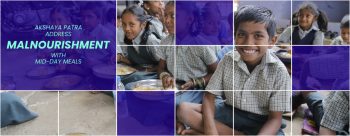
Minimum or no access to nutritious food results in deficiencies of vitamins and micronutrients in children. As a part of the MDM scheme which is now known as the PM POSHAN Abhiyaan, school meals are provided to lower and upper primary school students. With the implementation of the Government’s Midday Meal Programme in India, 16 million children benefit daily.

There are many NGOs that run this scheme for the benefit of children coming from challenging backgrounds. The Akshaya Patra Foundation is one such NGO catering to the nutritional requirements of children.

Reach of this NGO in India
The Akshaya Patra Foundation is a non-profit organisation that implements the Government’s Midday Meal Programme. This Foundation has the distinction of being the world’s largest NGO-run school lunch programme, serving freshly cooked nutritious meals to over 1.8 million children in 19,039 schools of 13 states & 1 union territory. It caters to the local palate of children studying in Government and Government-aided schools with its centralised and decentralised kitchens present in 58 locations of India.

After continuously receiving school meals, drastic physical and cognitive developments have been recorded in mid-day meal beneficiaries. Meals become an incentive for parents from low-income backgrounds to send their children to school so that they can receive at least one complete meal a day.
To read stories of children, click here.

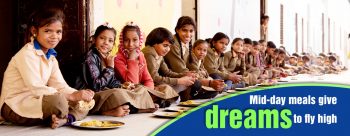
Donate online to support children’s food and education on every day of their school. Your contribution to this NGO in India will help in supporting the dreams of little children who aim big in life.

read more
Food and Education

Akshaya Patra – NGO responsible for bringing social change via midday meals

ngo in india

India has established itself as one of the potential superpowers of the world but has a lot more to address on the malnutrition front. To achieve sustainable development, many ministries have lined up to achieve various goals. A few of them are listed below:

• Ministry of Education
• Ministry of Health and Family Welfare
• Ministry of Women and Child Development
• Ministry of Statistics and Programme Implementation
• Ministry of Finance

Over the last few decades, India is contributing rigorously to the second goal of Sustainable Development Goals (SDGs); which is to tackle all forms of hunger and malnutrition. To address this issue, the Indian government came up with various concepts and provisions like Public Distribution System (PDS) for food grains – provision of subsidized food, Integrated Child Development Services (ICDS) – targeted food supplementation to pregnant women nursing mothers and children, National Midday Meal Scheme – provision of a cooked meal once a day to every school child.

Role of NGOs in supporting the Government of India
NGOs play an important role in the development of a community, a state or a nation. On a broad level, the major roles of NGOs are to be:
• An Implementer
• A Catalyst
• A Partner

NGOs bridge gaps between philanthropists and beneficiaries. With online donations, contributions, in-kind donations, etc., NGOs benefit the target group in various ways. It also helps in expanding its reach to bring more beneficiaries under its umbrella.

Given the population of India, it is a humungous task to feed every single child. This is why various NGOs joined hands with the Government of India to implement the midday meal scheme on a large scale.

Role of Akshaya Patra in supporting health and nutrition of school children
The Akshaya Patra Foundation is an NGO that has taken to serving school lunch to its beneficiaries since 2000. Today, it has the distinction of being the world’s largest NGO run school lunch programme, which serves freshly cooked, nutritious mid-day meals. After the mandate of the Supreme Court of India to begin the midday meal scheme across the country, other NGOs also started providing school lunches to children.

Did you know? Before the pandemic, Akshaya Patra served mid-day meals to 1.8 million children every day.

Studies have shown that midday meals improve attendance rates of school children, reduce dropout rates, improve classroom performance, help in cognitive development and improve nutritional levels drastically.

It becomes extremely necessary to nip the buds of problems right from the beginning. Eradicating classroom hunger is one such problem. Make online donations to Akshaya Patra to feed one child for a whole academic year. You never know which child needs your support the most; your contribution can bring a million smiles. All you have to do is think of their nutritional status and act to feed them nutritious meals.

read more
1 9 10 11 12 13 65
Page 11 of 65