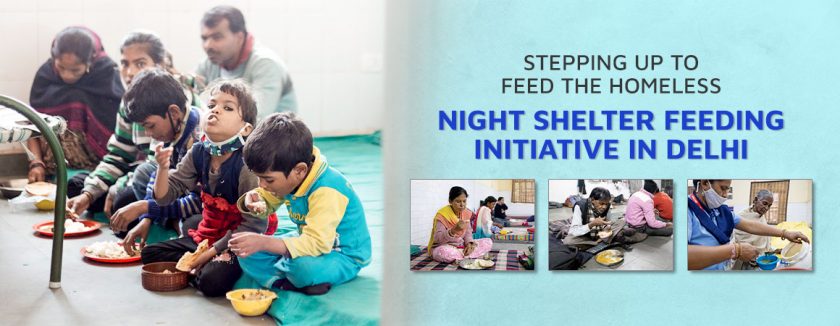
एक बसर बुखार चड़ा होगा तो फिर भी सो जाएंगे पर भुखे पेट तो चौबीस घंटे नींद नहीं आएगी। (“If we have fever, we will still sleep. On a hungry stomach though, sleep will evade us for 24 hours.”) 65-year-old Omkar—a dweller of the Dandi Park rain basera (night shelter)—talks about the importance of food. Omkar is one of the thousands of beneficiaries of The Akshaya Patra Foundation’s night shelter feeding in Delhi.
Akshaya Patra has always strived to utilise the spare capacities of its kitchens to serve the community—be it food relief as a part of humanitarian efforts during emergencies, feeding of widow mothers in Vrindavan (Uttar Pradesh) or COVID-19 food assistance across the country since March 2020. In the same vein, the Foundation is now working with the Government of NCT of Delhi to serve cooked meals to homeless people taking refuge in 209 night shelters run by the Delhi Urban Shelter Improvement Board (DUSIB).
Across Delhi, thousands of individuals seek refuge in DUSIB’s night shelters. These dwellings function year-round to provide basic facilities, including a bed and blanket, basic medical care and food, to the homeless. Every individual taking refuge in these facilities has his or her own reason. While the homeless seek protection from the harsh winter, migrant labourers consider it free accommodation which helps them save a portion of their meagre earnings to send it to their families back home.
Akshaya Patra operates four kitchens in Delhi in its capacity as the implementing partner of the Mid-Day Meal (MDM) Programme. It is currently using three of these kitchens (i.e., Gole Market, Badli and Jahangirpuri) to undertake the feeding initiative. It is serving nearly 12,000 meals to the homeless in night shelters every day. These include aged persons, daily-wage labourers, widows and single women, individuals battling addiction and individuals needing medical care, among others.
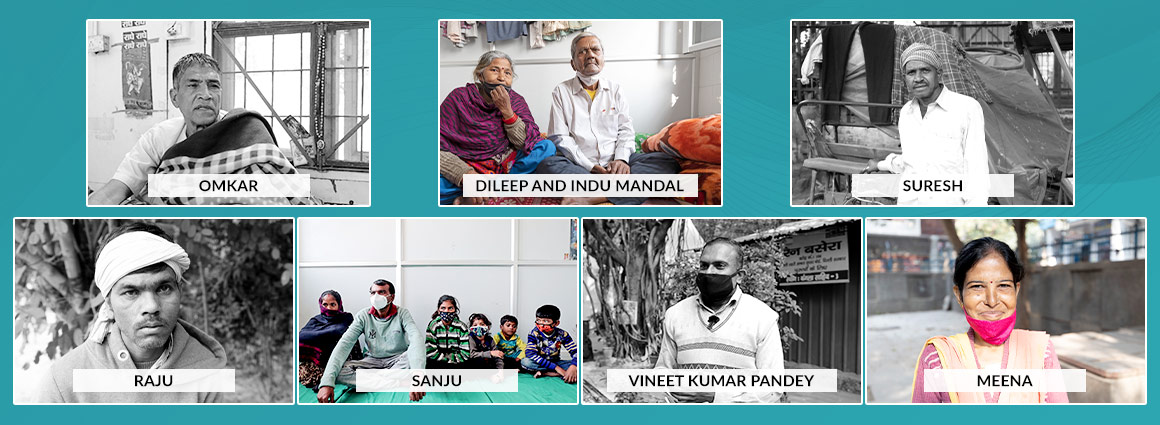
Like Omkar, many people aged 60 and above seek refuge in these shelters with nowhere to go due to personal reasons. Their problems are compounded by the fact that they can’t find any work due to their age. While shelter homes put a roof over their head, Akshaya Patra’s feeding initiative helps address hunger by providing them lunch and dinner. “Now we have a roof on our head and blankets. We get food in the afternoon and evening which is of immense help so much so that if it doesn’t come, we will have to go to sleep on a glass of water,” Indu and Dileep Mandal, an elderly couple living in a family shelter, express.
Delhi is one of the preferred destinations for people from various parts of the country who seek a better life for themselves and their families back home. Many of these people engage in daily-wage work, such as painting/whitewashing, construction site labour, pulling cycle-rickshaw, etc. They step out to work during the daytime and return in the evening, with the free shelter and food helping them a lot financially. “We earn a meagre sum after working the whole day,” Suresh Ram, a cycle-rickshaw puller who has come to Delhi from Odisha, states. “If we spend money on food at a hotel, it eats into our savings. Then we are left with hardly any money to send home. The free food helps us save money for our family.”
“Due to COVID and cold weather, people are not stepping out. That means there is less work for us,” Raju—another cycle rickshaw puller—voices their problem. “Luckily, we have a place to sleep and good food to eat. With the food taken care of, I can save enough money to take care of my family,” he further adds.
While they were earning barely enough to pay the rent before the pandemic, their situation has now worsened and many of them have been left with no option but to move into these night shelters. Sanju, a painter by profession, has temporarily sought shelter in one of the rain baseras with his family. He says, “It is the circumstances that have brought us here. We would have preferred to work hard and live in our own house, but that is not possible. For people like me, there is no work due to COVID.” Sanju is waiting for the day things will return to normal. Until then, this food and shelter are the only sources of comfort for them.
The Government is doing as much as it can to ensure that people are not left out on the streets in cold. Every day, volunteers and police patrol the streets and ask those living on the streets to move into night shelters. Padmini and her family were making a living by selling toys on traffic lights. With the winter becoming intense, the cops asked them to move into night shelters for their own safety. “When they asked to move we shifted from our makeshift structure in the vicinity of traffic lights to this temporary shelters. It is better because now we are protected from cold and we also get free food at this shelter facility,” she says.
Many people have lost their jobs due to the pandemic. With no money to pay the rent, many of them were forced to return home. As things slowly return to normal, they are coming back. Vineet Kumar Pandey, a native of Uttar Pradesh, used to work as a security guard in Delhi before he lost his job and returned home during the pandemic. He is back in Delhi now. His former employer got in touch with him for an opportunity. Vineet tells us, “He [employer] assured me that he will sort things out, but it will take a couple of days. I needed a place to stay until then. So I went to Bangla Sahib Gurudwara. Someone there told me about this shelter facility and I moved here. It is a nice facility where we get all the basics, including food.” Circumstances have also prompted many people to send their families back to their hometown and find temporary refuge in these shelters.
Everyone is aware of the importance of food and shelter. Meena, a resident of a shelter for women in Dwarka, puts it aptly. “Even if we are working somewhere, we need two things: proper sleep and good food. We no doubt need money because there are other expenses. However, if we can sleep properly at night and have good food to eat, then we can be content and lead our life. The good thing about this place [rain basera] is that we get both these things.”
The Government of Delhi is doing a remarkable job in helping homeless people. Akshaya Patra’s strives to aid the Government’s efforts through the night shelter feeding initiative. For the thousands of people taking refuge in these shelters in the harsh winter in Delhi, two things provide immense comfort – a warm bed and blanket and the assurance of a hot meal.