
close
Discussion Room

Skill development in India: A dire need

TAPFSKILL

Skill is the ability to do something well. And when it comes to skill development in India, a lot of initiatives have been happening in the past two years. Prime Minister Narendra Modi launched the Skill India programme in May 2015 with an aim of training 40 crore people in India in various skills by the year 2022.

Why skill development in India is crucial?

Skill development today is especially important for students because Indian students have often been found to be unemployable by multi-national companies. While many leave the country for greener pastures, many young people in India find themselves under-qualified for jobs. Why do we need skill training? How does it help the individual in the future?

Advantages of Skill India

The Skill India initiative aims at reversing the brain drain and making the youth of India skilful and self-dependent. Among the various advantages of Skill India are: better productivity, development of skills at school level, confidence building among youth, involvement of rural and remote areas, etc.

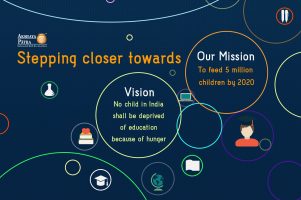
The skill development programme especially excites NGOs such as Akshaya Patra that are actively involved in the field of education by serving wholesome lunch in Indian schools. As is outlined in a blog here, the organisation is committed to participating in any initiative that involves skill development for students and youth.

The organisation aims at bringing dropped-out children back to school by motivating them through mid-day meals. These are good quality nutritious meals that encourage children to attend school every day. That way, students are able to attain basic education that’s vital for developing their skills in future.

In addition, Akshaya Patra also works to enhance the skills of the entire workforce that’s involved in the serving of mid-day meals. In association with the Ministry of Human Resource Development, the organisation conducts training programme for cooks and helpers of the Mid-Day Meal Programme. Similarly, the government is partnering with several other organisations as part of the skill development programme so the youth in India feels confident to choose their professions and jobs. This time, the focus is shifted from traditional professions and directed towards vocational training and interest-based programmes in rural and remote areas of the country.

read more
School Note

School chronicles: What it was like meeting beneficiaries in Nagpur

School-Chronicles-What-It-Was-Like-Meeting-Beneficiaries-In-Nagpur

Travelling to our beneficiary schools to meet the children we serve is one of the best aspects of the job, for those of us who work at Akshaya Patra. The energy and enthusiasm of our young beneficiaries are infectious and I must admit, a feeling of nostalgia and wistfulness follows after we leave the schools, longing for days past when we too were without a care in the world and had a head full of dreams. Recently, I travelled to Nagpur to meet the Foundation’s beneficiaries and the experience was enriching and eye-opening.

My colleagues and I at the Foundation visit different cities across India to talk to our beneficiaries about their dreams, ambitions, what their school life is like and how they like the food served by the Foundation. This helps us connect with our beneficiaries on a personal level and gives us a chance to offer a slice of their lives to the world – their determination to study well and make a bright future for themselves.

Nagpur has recently come into the Akshaya Patra fold, as our kitchen there was inaugurated just last year, in August 2016. I spent five days in the city, visiting four government schools, where we serve our meals. These were the Deaf and Dumb Industrial Institute in Shankar Nagar locality, Shivangaon Marathi Prathamik Shala (Shivangaon Marathi Primary School) in the Shivangaon village on the outskirts of the city, Nishatai Wankhede Uchcha Prathamik Shala (Nishatai Wankhede Higher Primary School) in Kamla and the Dr Ambedkar Secondary School and Junior College in the Untakhana area.

What struck me most about Nagpur is that children in government schools come from families that are relatively well-off. There is no dearth of employment in the city and the parents are diligent, ensure that their children’s educational journey is as smooth-sailing as possible and take care to make available the resources they need for the same.

The Deaf and Dumb Industrial Institute, the first school I visited, was a unique experience. Quietness envelops the school and the sounds one hears on its campus come either from nature or the pattering of feet. Here, the first student I met was a boy named Prem, who was about 14 years old. He had been found on Nagpur’s railway station, unable to communicate anything because he was deaf and mute. The name Prem was given to him by the policeman who found him. The teachers said that they were teaching him sign language, which was difficult as they had no way of knowing if they were getting through to him. Most of their teaching was done through trial-and-error method, for this reason. He had also been diagnosed to be slightly mentally challenged.

The other students we met in the Deaf and Dumb Industrial Institute were extremely lively, but lacked much ambition, because they had never been encouraged to dream big, due to the perceived limitations of their condition. However, success stories do exist amongst them. One of this school’s former students, Mangesh Wankhede, now works at Indian Space Research Organisation (ISRO), the teachers told me. Another is doing his Bachelors in Engineering (BE). They just need a great deal of encouragement and familial support to pursue conventional careers. When my colleagues and I were taking leave of the teachers and the students at this school, they gave us beautiful, colourful, paper flowers handmade by the students.

Photo Collage by Students
Handcrafted paper flowers made by students of the Deaf and Dumb Industrial Institute, Nagpur

At the other schools, most of the students we met wanted to be either policemen/policewomen, doctors or engineers. One student though, wanted to be President of India! However, he had no answer to questions like ‘who is the current President of India?’, ‘who’s the current Prime Minister?’. He probably wanted to impress his classmates, teachers and visitors with a unique answer. We did meet children with unconventional, unique ambitions too – one wanted to be an air force pilot, another a cricketer, yet another an astronomer and one young man, inspired by the hit TV show CID, wanted to become an investigative officer, his inspiration being the character Daya, of “Daya, Darwaza todo!” (“Daya, take down the door!”) fame.

A common observation across these schools, that touched us deeply, was the dedication and love the teachers have towards their students. In two of the schools, teachers pooled in money from their own pockets to make certain amenities available to the children. The children too, had a great deal of respect and affection for them and the bond they shared was beautiful. It was also great to know that all the children unanimously liked the food served by Akshaya Patra and many confessed to preferring it over the food cooked at their homes. The masale bhaat we served there seemed to be a favourite of many of our beneficiaries in the city.

No account of my trip there would be complete without a mention of the wonderful staff – administrative as well as kitchen staff – working for Akshaya Patra Nagpur. The hospitality of people in Nagpur is renowned – they are happiest when feeding people. One of our employees there told me, “If one’s hunger isn’t satisfied in Nagpur, he/she can’t feel full anywhere else.” They take care of each other as diligently as they prepare meals for the children in the city and lunch time is particularly special, as they share their dabbas (tiffins) with each other, with much cheer.

The warmth of teachers and students, along with that of the wonderful people working at Akshaya Patra Nagpur, was truly moving. One can fully understand the power of the Mid-Day Meal Programme when one visits beneficiary schools and experiences the joys of childhood and aspirations of the children, which get much-needed support, all thanks to a nutritious school lunch every day.

read more
1 27 28 29 30 31 66
Page 29 of 66