close
Discussion Room

6 Parenting skills can shape your child’s future

Helathy Children

Parents are said to be the first teacher children have. The responsibility of ensuring that the child is brought up in a healthy environment and gets the right education and nutrition lies on their shoulders. But what if the parent ensures that the child gets right education by sending them to school but a nutritious meal is something they can’t afford?

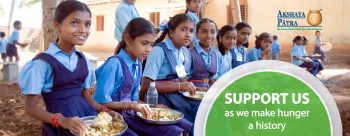
The Akshaya Patra Foundation aims to fill in the gaps with its school lunch programme, where the meals are calibrated for providing the right nutrition at the age when their body is growing. This will ensure that their body remains healthy when they grow to adulthood.

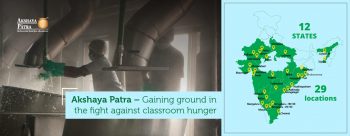
Our kitchen staff – which contains both men and women – cook food with utmost love and care to ensure that its tastes delicious and children look forward to it every day. Utmost hygiene is maintained to ensure that the food remains fresh and healthy till the time it reaches children, whose school is sometimes located 100 km away from the kitchen.

While we serve unlimited meals to over 1.6 million children every school day, the parents are left with another task to direct their energies in making sure that they are lead towards positive development. For this, parenting skills play an important role. While there are multiple ways to bring up children, some basic parenting skills go a long way in ensuring their bright future.
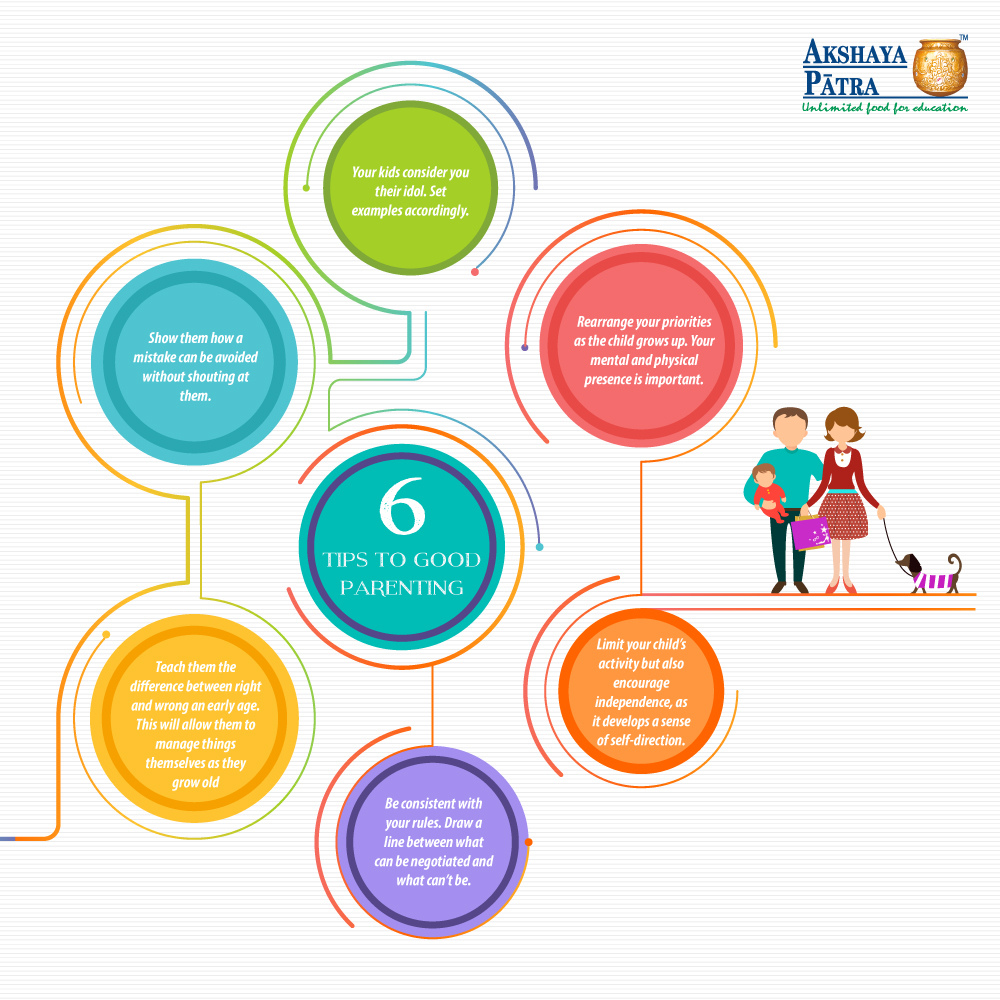
Parenting-skills

What are the tips you apply to ensure your children become a responsible individual? Comment below

read more
Discussion Room

The domino effect: the unseen impact of child labour

world day against child labour

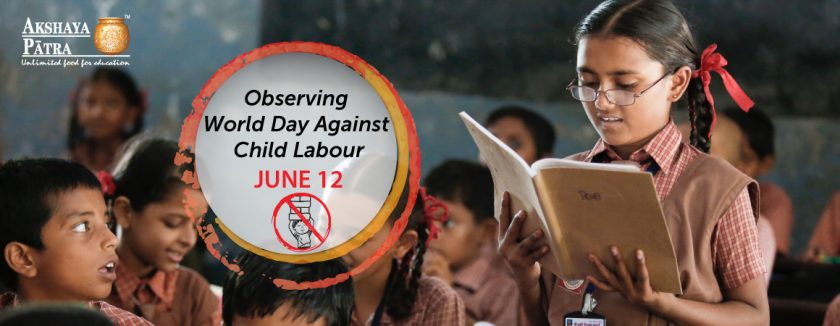
Can you imagine your life and successes without the education you received? Many children in India are robbed of the opportunities for advancement that a good education brings because they are pushed into labour for financial sustenance. On June 12, World Day Against Child Labour, an initiative of the United Nations’ International Labour Organization (ILO), is observed around the world, to bring attention to the issue of child labour and the efforts and action needed to eliminate it.

According to the Census of India 2011 there are 43.53 lakh children between the age group of 5-14 years employed in various occupations. Although this figure has reduced drastically compared to the results of the Census of India 2001 which calculated 1.26 crore working children from the same age group, India still has a long way to go to become child-labour free.

Child labour is most prevalent in third world countries where poverty is rampant. Because parents lack the skills and opportunities to provide adequately for their families, children have to take up employment to help the household make ends meet. In an alternative form of child labour that is often ignored, children also frequently stay at home to look after their siblings and manage household chores, freeing their parents to work the whole day. This means that they have to drop out of school (or never enroll in the first place) to take their place as earning members of the family.

Watch Akshaya Patra’s inspiring video against child labour – The Possibilities – featuring the song Naan Yen, with music by none other than the maestro – AR Rahman

Child labour has consequences that are hard to imagine. Like a domino it has the power to tumble national progress, innovation, social security and many other factors if left unaddressed.

  • Perpetuates the cycle of poverty – Because children don’t have the opportunity to study and attend classes they are denied the opportunity to hone their skills for the future. This keeps them in a position of economic disadvantage, and the cycle of poverty and child labour is passed on to future generations.
  • Negative impact on the nation – Child labour has effects that reach far beyond the individual, family or community. It has a national impact that affects the growth and prosperity of the country as a whole. Child labour affects the country across different parameters:
    1. Forced to give up on their education in favour of employment, thousands of children grow up to be disadvantaged, unskilled members of the work force. This loss of income in turn lowers the country’s economic growth each year.
    2. Poor access to proper education causes the population to grow up unaware of their basic democratic rights and duties. Without the citizens playing an active role in their nation’s progress and governing policies, the country cannot flourish.
    3. Child labour forces children to work in hazardous and traumatic conditions with poor hygiene that affects their productivity in the future, negatively affecting the nation’s long term health.
    4. Due to the easy availability of inexpensive child labour, manufacturers are loathe to upgrade production processes and invest in fixed capital. This stunts the nation’s technological advancement and reduces efficiency of production to a large extent.
    5. Poor access to education due to child labour serves to also enhance the huge inequality of wages between skilled and unskilled labour. This chasm causes the rich to get richer, while the poor spiral deeper into poverty.

Child labour is a social evil that affects each of us on some level. One certain way of fighting against it – and winning – is to provide access to affordable education.

By serving the daily school lunch, Akshaya Patra helps combat child labour by providing food for education to children in need. This programme brings children out of the workshops and into the classroom by relieving them of the burden of working for their daily meal. Join us in doing this and more in our fight to end classroom hunger. Donate to Akshaya Patra today!

read more
1 26 27 28 29 30 66
Page 28 of 66