


World Food Day is a day observed every year on October 16, when organisations and people around the world come together to declare solidarity against hunger. They take part in community events and awareness campaigns encouraging people to take action against hunger. Meal packing and delivery, food drives, walkathons, there several ways for one to take part in this quest for a sustainable solution. Because whether well-provided for or underserved, one aspect where individuals of all societies surrender is hunger. It is also true that hunger in many countries has taken on the avatar of an epidemic.
India stands as one of the topmost countries facing the retribution of hunger for many decades now. Here are few facts on India’s standing pertaining to food security—India climbed to the 55th position in the Global Hunger Index 2014 as compared to its 63rd position in 2013; the Rapid Survey on Children (RSOC) by UNICEF indicates that there has been a decrease in child stunting for children below the age of five in India from 48% in 2004-05 to 38.8% in 2013-14. These statistics may give us a sense of achievement but as a nation we should have had steeper upward graph in the GHI.
Whether the cause for this extensive prevalence of hunger is food wastage, improper storage and distribution, price rise or economic disparity; the continued prevalence of hunger has caused much damage to the children of our nation. 30.7% children under five years old are underweight, 1 in 4 children are malnourished and 3,000 children die every day from poor-diet related illness.
Many NGOs and innovative companies are partaking in the Government’s attempt to counter hunger by taking responsibility in the various initiatives developed. The Akshaya Patra Foundation is one such NGO that implements the Mid-Day Meal Scheme across 10 states benefitting over 1.4 million children every day. By providing these mid-day meals, it aims to bridge the gap of inaccessibility to wholesome food during the growing years of underserved children. Since children have to attend school to benefit from the mid-day meal, it also incentivises children to read and learn, thereby developing them into educated citizens of the nation.
But it not just the Government’s, NGO’s or companies’ responsibility to eradicate hunger, individual involvement is needed to ensure that one day we live in a hunger free society, flagging off with freedom from classroom hunger.
Tell us your thoughts on how we can all contribute to end child hunger in India.




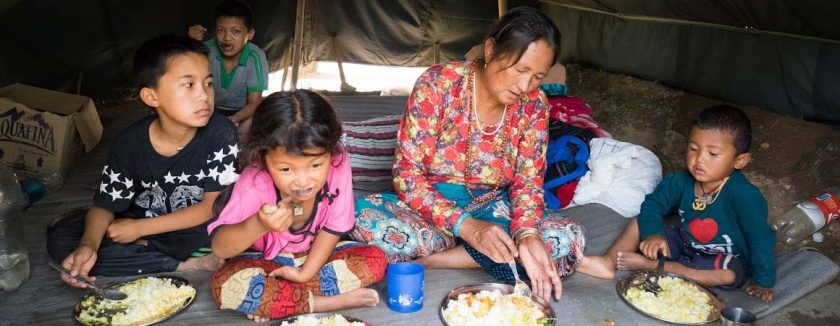
 The icing of the cake was what a lady said, which I think was written in the papers also. She said it’s not just about Akshaya Patra serving food. The initiative has brought people together at the camps too. It has created a social gathering because they all sit around where the food is being served. When we were serving the food, that one hour in the morning and evening became a social gathering where they could forget their troubles and look forward to something brighter. This for me was the greatest takeaway.
 More than income, it was a more of fostering cooperation between us and the people of Nepal.
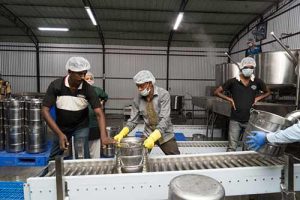 Even more surprising was when their first month was over and we were giving them their salary, they refused to take it. They said they were indebted towards Akshaya Patra for their service, but we made sure they take their salary. That for me was a great feeling.


