
Kaizen is a Japanese word meaning ‘good change’. Kaizen for businesses has come to be known as continuous improvement attained by involving everyone in the work environment.
The essence of Kaizen is that continuous improvement is brought by individuals who perform particular tasks, as they are more knowledgeable of that task. Through this method, an organisation shows its confidence in the capabilities of individuals, and induces a sense of ownership over that process among them.
For years, Akshaya Patra has encouraged its employees to adopt Kaizen for continuous improvement in order to achieve excellence in its operations. This is crucial for the organisation as it finds itself highly responsible to ensure optimum utilisation of the resources so that it can realise its goal of feeding millions of children each day. Moreover it is our responsibility to do justice to the trust vested in us by the Central and State Governments along with contributions from all our donors, supporters and well-wishers from India and across the world.
Kaizen is adopted at various levels of operation, through initiatives by the kitchen management. Below are a few examples from last year. These successfully implemented Kaizen Projects were simple yet cost effective, time saving, yielding much better, one way or another.
A Peek into the Kaizen Initiatives at Akshaya Patra during 2013-2014
Price Optimisation in Vegetable Procurement
The Hubli kitchen primarily followed a fixed price contract with an external vendor. One of the limitations of this system was the lack of variety in vegetables and leafy vegetables. As a Kaizen initiative, the purchase team started procuring directly from the State Government-run Agricultural Produce Market Committee (APMC). As a result, Akshaya Patra can now save on costs since the price of vegetables at the local market is much lesser than that quoted by the vendor. This has resulted in saving costs as well as also helped in improving the taste of sambar/curry with varieties of vegetables and greens in it.
Planning route went a long way
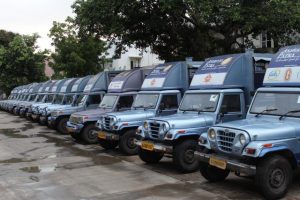
Guwahati operations had recorded vehicle distance coverage of 145 km per day that led to 16 litres of petrol consumption each day on distribution of meals to 13 schools. Route analysis, a Kaizen initiative helped reduce the diesel consumption of the vehicle plying one of the routes by 6 litres per day and the distance has been reduced by 50 km. The Kaizen analysis showed that by rotation of the stock of vessels for 13 schools, the distance could be reduced. This has also been a cost saving initiative.
Chick Pea, Pigeon Pea and Split Pea
A combination of pigeon pea (toor dal) and split pea (matar dal) was being used in the preparation of dal. A rise in the market price of pigeon pea resulted in an increase in the cost per meal. After the implementation of Kaizen, the ingredient composition for dal comprised of measured quantities of chick pea, pigeon pea and split pea. This resulted in better taste and nutrition and a favorable feedback from children.
 Starch-less cooking
It was found that starch-less cooking implementation could lead to reduced cost involving disposal of starch, enhanced nutritional value of the rice, simultaneously saving significant volumes of water. Skilled labour combined with continuous trial and error efforts made this idea a reality. During the trial and error method it was discovered that maintaining appropriate water levels in cauldrons, maintaining high pressure steam and keeping the lid closed for an appropriate time, are the vital keys in the process. The good feedback from the schools has favoured the implementation. The rice now has enhanced nutritional levels, better taste, reduction in cooking time and cost saving as well.
Vessel Management in the Wash unit
Earlier, it took 4 hours to wash 1800 vessels. The vessels would be unloaded near a washing point and employees would have to manually shift the vessels to the designated washing bay resulting in hectic movement and wastage of time. Now, as a Kaizen initiative, coupons are being issued to the vehicles carrying vessels. Based on the coupon number, the corresponding vehicles unload vessels near the washing point. This has not only helped to reduce the effort needed to shift the vessels but has also reduced the vessel washing cycle time from 4 hours to 3 hours. The cascading effect has also been on reduced electricity usage and reduced water.
Quality Food is everything at our kitchen
As a part of the ISO 22000:2005 surveillance audit and with a commitment to ensure periodic verification, samples are drawn and analysed in a National Accreditation Board for Testing and Calibration Laboratories NABL accredited laboratory. Samples of cooked food, swabs of equipment, personal hygiene of employees, chlorinated vegetables and raw materials are sent to the laboratories for checking compliance level and effectiveness of the food safety practices being followed. After the implementation of Kaizen, the Bangalore kitchen at H K Hill additionally gets food samples from the school analysed at periodic intervals for microbiological parameters. Sample of food from select schools which receive the food cooked in the first batch are sent for testing. The reports help to give a better understanding of the shelf-life of cooked products after several hours of production and transport.
With each of these and more such initiatives by the employees, Akshaya Patra aims at holistic development of its operations. Individual and team efforts along with continuous improvement initiatives at every level will aid toward optimum utilisation of resources, leading to increased capacity of the organisation in reaching more and more children.