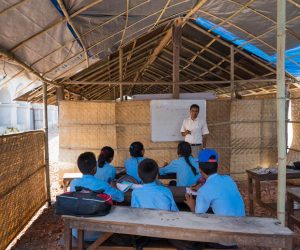

At Akshaya Patra, we are passionate about the food that we serve our children but when it comes to the nutritional content of the food, we are meticulous! We are aware that children have their unique nutrient needs and meeting those needs is vital for a child to grow strong and healthy!
Children sit in classes earning to hear the bell ring and then- woo-hoo! It’s break time! These lunch-breaks serve as long-awaited tonic from dreary lessons of Math and Science welcoming excitement in school corridors and playgrounds! Requests for games are rampant and there are little fingers dabbling in lunch ingredients all over the place. Not only does this decrease the time children get to eat their lunch but also results in hurried and selective eating that is detrimental to children’s health and learning!
Hence in such a situation when time is stipulated and one needs to ensure children eat the right combination of nutrients, vitamins, fat, protein, carbohydrates and fibre it indeed becomes a daunting task, especially when it is an everyday ritual.
We who strictly believe in clean and healthy eating have therefore come up with a no-fuss lunch menu that not only suits the various palates that we serve but is also the right blend of
- vegetables
- proteins
- dairy
- grains
- oils
- nutrients
The mid-day meals are only prepared with the best quality raw produce that is meticulously scrutinised in terms of supplier selection, qualification and rating before starting the cooking process. Every vegetable is washed with potable water and then placed in cold storage for a few hours to retain their freshness while other preparations are made for the day’s cooking. We just don’t stop at this; we ensure that the produce is only accepted after a complete quality inspection to make sure that it meets with Akshaya Patra’s Raw Material Specifications, adopted from the Food Safety Standards Act 2006 (FSSA).
We do all of this just to ensure that children get all the support they need to eat joyful meals, attend school regularly and pursue their dreams.
Akshaya Patra being one of the world’s largest NGO run school lunch programmes takes the opportunity of serving children with meals that are a perfect blend of nutrition and taste. Don’t believe us…? Hear it from them!
 Bharathi Mahapatra, Headmistress, Odisha – “I am grateful that the Mid-Day Meal Programme by Akshaya Patra came as an incentive to education which actually offers two of the fundamental rights of food and education to the children. Absenteeism is less and children are very interested to come to school. The children get to live their childhood as they are supposed to.”
 Syed Basheer, Teacher, Hyderabad -“Food is an important factor for many students in this school. A child needs food to study and we ensure that every child in the school is fed well. Akshaya Patra is doing great work by feeding these children in our school. For some it’s a blessing because they don’t eat food at home every day. Not only has the students’ health improved, but their academics record also reinstate that a good and nutritious meal plays a crucial role in brain development.”
 Nousheen, Student, Telangana – “My elder sister Afreen has a hand deformity. Sometimes, students would make fun of Afreen when she would eat the mid-day meal at school. Because of this she refused to eat with her friends fearing that they would ridicule her for her disability. Over time, I continuously encouraged her to eat the Akshaya Patra mid-day meal because of the healthy nutrients in their food. This will also help Afreen improve her disability.”
These are just a few validations of the everyday work that we do in reaching mouthfuls of freshly prepared mid-day meals to our beneficiaries. We believe in nutrition for children and will only encourage them to take just the right bite!