
close
Akshaya Patra Kitchen Stories

Gorakhpur just got itself a new kitchen

Built to serve thousands. Designed to make every meal count.

On 25 June 2026, the capacity of one lakh hot meals cooked by one kitchen every day stopped being a dream for Gorakhpur’s schoolchildren and started being a daily, delicious fact that will take its course soon. Here’s the story of the kitchen that’s rewriting what “scale” means for classroom nutrition.

Gorakhpur, Uttar Pradesh | 25 June 2026 | Capacity: 1,00,000 meals/day

Chapter One · Why this kitchen exists

Every Akshaya Patra kitchen starts the same way: with a very simple, very strong belief that ‘no child shall be deprived of education because of hunger’ should study on an empty stomach. Gorakhpur has been living that belief since 2019, when our meals reached about 5,000 children from a modest setup. Slowly, the numbers climbed… 17,000, then 35,000 across 310 schools. Good progress. But the city and the need, kept growing faster than the old kitchen could keep up. So we built a bigger one. A much, much bigger one.

The glow-up, by the numbers
This isn’t an overnight success story but five years of steady expansion, capped off by one very big leap.

  • 2019 – 5,000 children, first served
  • Early growth – 17,000 children via a temporary facility
  • Scaling up – 35,000 children across 310 schools
  • 25 June 2026 – 55,000 children across 546 schools, day one
  • The horizon – 1,00,000 children, 1,570 schools, phased
  40,000 rotis rolled out every hour     23 electric vehicles on delivery duty   25th year of Akshaya Patra’s journey

Chapter Two · Meet the kitchen’s powers

This kitchen didn’t just get bigger. It got smarter. Think of it less like a kitchen and more like a very well-organised superhero team.

The Roti Machines
Automated roti-making units work side by side, together capable of turning out roughly 40,000 soft, hot rotis every hour without a single one going missing in the count.
Solar panels + biogas
Solar panels and a biogas setup share the load of powering and fuelling the kitchen, cutting down on pollution because feeding a city shouldn’t cost the planet.
The EV Fleet
23 electric vehicles fan out across Gorakhpur and its neighbouring areas every single day, making sure meals reach schools while they’re still steaming hot.
The Reach
From 546 schools on opening day to a planned 1,570 schools, this kitchen was built to grow into its full capacity of one lakh children in careful, deliberate phases.

Chapter Three · The big day

The inauguration itself felt like the celebration it was. Uttar Pradesh Chief Minister Shri Yogi Adityanath, as Chief Guest, was joined by Minister of Primary Education Shri Sandeep Singh to formally open the doors. It was, at its heart, a partnership moment… the Government of India, the Government of Uttar Pradesh and Akshaya Patra, all showing up for the same cause.
“A healthy, well-nourished child today becomes the foundation of a stronger, more capable nation tomorrow,” a sentiment the Chief Minister returned to throughout his address, tying nutrition directly to education and national growth.
After the ribbon was cut, the Chief Minister toured the facility, inspected the arrangements and served meals to the children himself.
Before he left, the Chief Minister planted an Amla (Indian gooseberry) sapling on the kitchen premises as a small, quiet gesture, but a fitting one. Both the tree and the kitchen are built to nourish and both need years of steady care to reach their full potential.

Chapter Four · Why we keep building kitchens

One kitchen. Three things it quietly fixes at once.
01: Hunger, addressed daily
A hot meal removes the single biggest reason a child skips school in the first place… an empty stomach.
02: Attendance, strengthened
Where the meal shows up reliably, so do the children and so does the learning that happens once they’re in the room.
03: A generation, better fed
Under PM POSHAN, this kitchen turns a national nutrition promise into something as concrete as a plate on a desk.

Twenty-five years in, and the kitchens are still just getting started. Every rupee helps power the next roti machine, the next EV, the next school on the list. Support a child’s next meal.


read more
Food and Education

How Healthy Children Learn Better?

Fueling Education Through Nutrition

Nutrition: The foundation of a child’s growth and learning

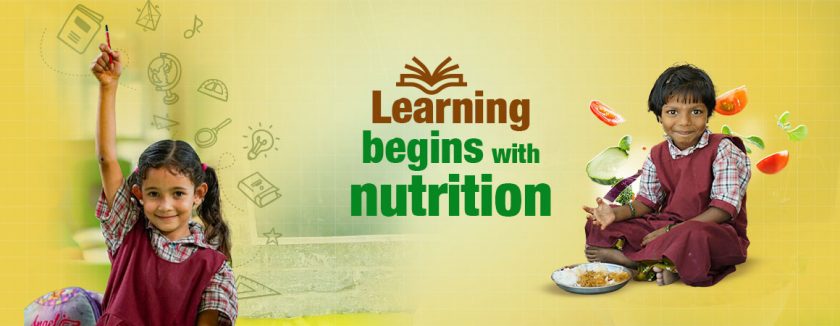
Nutrition plays a defining role in the physical, emotional and cognitive development of children. A nutritious meal supports concentration, memory, immunity, energy levels and overall growth. For school-going children, especially those from underserved communities, access to regular and balanced meals can directly influence attendance, classroom participation and learning outcomes. Adequate child nutrition helps children remain active, attentive and motivated throughout the school day, while poor nutrition often leads to fatigue, illness and reduced academic performance. As schools continue to shape the future of young minds, ensuring proper morning nutrition and daily nourishment becomes essential in helping children stay in school and pursue their education with confidence.

Government Initiatives Supporting Child Nutrition

Recognising the strong link between nutrition and education, the Government of India has introduced several welfare initiatives aimed at supporting schoolchildren. Among these, the PM POSHAN Scheme – formerly known as the Mid-Day Meal Programme, has emerged as one of the country’s most impactful school feeding initiatives. Designed to improve enrolment, attendance and retention, the programme ensures that children studying in government and government-aided schools receive nutritious cooked meals during the school day.

In addition to the mid-day meal initiative, schemes focused on food security, health check-ups, micronutrient supplementation and fortified foods continue to strengthen the larger ecosystem of child nutrition in India. Together, these interventions contribute to reducing classroom hunger and encouraging children to continue their education without interruption.

Supreme Court Guidelines on Mid-Day Meals

The importance of school meals was further reinforced through landmark directives issued by the Supreme Court of India. In November 2001, the Court directed all state governments to provide cooked mid-day meals to children in government and government-aided primary schools. This transformed school feeding from a welfare initiative into a rights-based intervention linked closely to the Right to Education and child welfare.

The guidelines emphasised the need to provide meals with adequate calories and protein content, maintain hygiene standards and ensure regular meal delivery. Over time, the nutritional benchmarks for school meals were further refined to meet the developmental requirements of children across age groups.

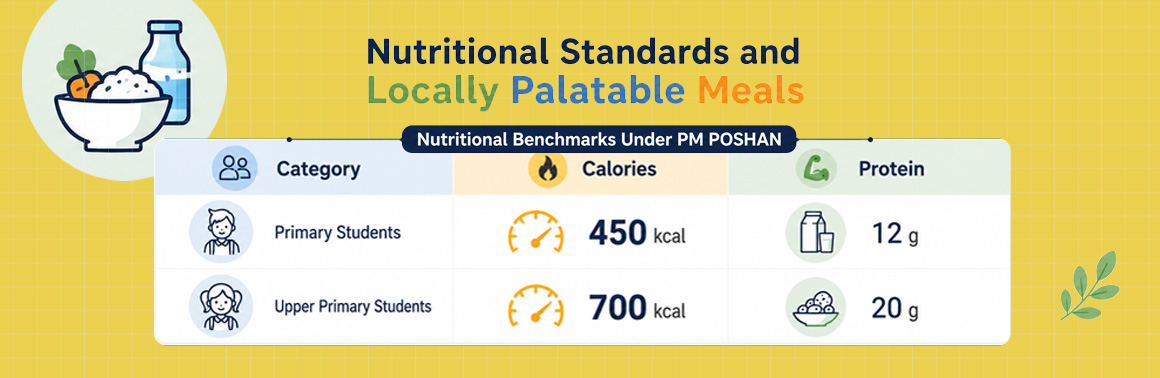
Under current PM POSHAN nutritional norms:

Infographic: Nutritional Standards and Locally Palatable Meals

These standards continue to guide the implementation of the Mid-Day Meal Programme across the country.

Nutritious Meals Served by Akshaya Patra

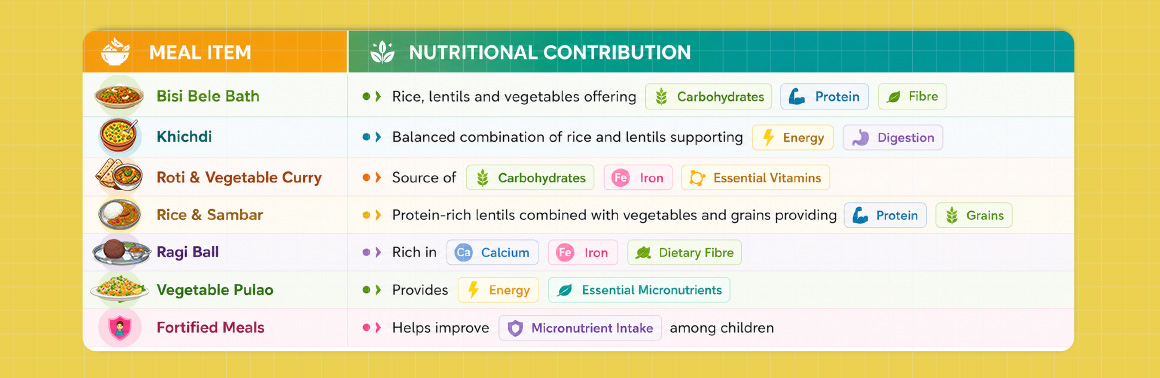
Akshaya Patra prepares freshly cooked, locally palatable meals that align with regional food habits while supporting children’s nutritional needs.

Nutritional Value of Vegetables Commonly Included in Meals

Locally Palatable Meals That Encourage School Attendance

Food habits vary significantly across India, making local relevance an important aspect of school feeding programmes. Akshaya Patra designs meals based on regional preferences so that children receive food that is familiar, culturally accepted and enjoyable. From bisi bele bath in Karnataka to khichdi in northern states and ragi-based preparations in select regions, these meals combine taste with nutrition.

This approach has helped strengthen participation in the mid-day meal initiative by encouraging children to attend school regularly. For many students, school meals provide dependable nutrition and become an important reason to stay engaged with education. Freshly cooked meals served with consistency and care help create a positive school experience while addressing classroom hunger.

Today, Akshaya Patra, recognised as a leading NGO in India, supports over 2.3 million children every school day across thousands of government schools in the country.

Why Donations Matter?

Serving nutritious meals at this scale requires continuous support and sustained resources. Every meal involves procurement of ingredients, large-scale cooking operations, transportation, kitchen maintenance and nutritional planning. Donations help ensure that children continue receiving nutritious food every single school day without interruption.

Contributions also help expand outreach to more schools and communities where children remain vulnerable to hunger and malnutrition. As the demand for school feeding continues to grow, public participation becomes increasingly important in sustaining the impact of the Mid-Day Meal Programme.

By choosing to donate online, individuals can directly contribute towards nourishing children, supporting education and helping millions continue their journey in school with hope.

read more
1 2 3 66
Page 1 of 66