
close
Akshaya Patra Kitchen Stories

Akshaya Patra’s First Ever All-Women-Run Kitchen

Where women take the lead – Akshaya Patra’s Barsana Kitchen

In the village of Ajnokh in Barsana, Uttar Pradesh, an Akshaya Patra kitchen implements the School Feeding Programme for thousands of children. But behind its operations lies a remarkable shift – it is Akshaya Patra’s first women-run kitchen.

Every morning, a group of women wakes up with hope and shared commitment to bring change.

Unlike in earlier days, when they had limited opportunities to achieve financial freedom (something that extends to freedom in other realms), this kitchen is setting an example of what women can achieve when they are given a chance to lead.

Many local women, who once stayed at home cooking, looking after their children and managing household chores, now carry a vision that extends far beyond their own kitchens – to serve nutritious meals to thousands of children across the region under PM POSHAN (Mid-Day Meal Scheme).

The Story of the First-Ever Akshaya Patra’s Women-Run Community Kitchen

Imagine a community kitchen where women lead every stage of operations – from meal preparation to kitchen management. How empowering it looks! This is exactly what is happening in our Barsana Kitchen, Uttar Pradesh. Since its inception in April 2023, women run the kitchen, ensuring every meal is prepared with care, quality and efficiency. As it successfully completed three years of service in implementing the Mid-Day Meal Scheme, the kitchen is currently run by 36 women and serves more than 5,000 mid-day meals every day.

Why Only Women?

The core purpose of Akshaya Patra is to empower communities through meals. We believe that when women are empowered, it will create a ripple effect, strengthening families, improving children’s well-being and building more resilient communities. Barsana Kitchen embodies this philosophy. While addressing classroom hunger by serving nutritious meals, Barsana Kitchen also gives employment opportunities for rural women, helping them achieve financial independence, build confidence and play a greater role in their families and communities. The impact extends even further by sourcing fresh vegetables and other raw materials directly from farmers, strengthening the regional economy. In doing so, the kitchen contributes to addressing broader socio-economic and gender-related challenges, paving the way for long-term social development.

Pooja’s Journey at Barsana Kitchen

“Earlier, I stayed at home all day looking after my children. But working here gave me an opportunity to do more for my children.”
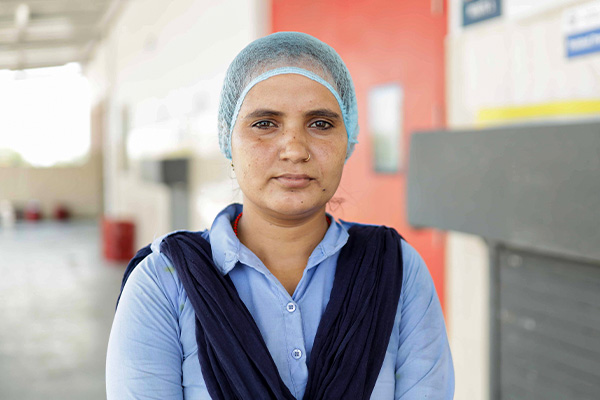
Pooja’s day starts at 3 AM on workdays. After waking up, she gets ready to go to the Barsana Kitchen, where she has an important role to carry out – prepare meals for schoolchildren. As a cook, she prepares dishes such as kheer, dal, subzi and kadhi, etc.

Talking about her role, she says:

“I feel good working here for children. I work as I do for my children at home. Many parents find it difficult to provide nutritious food for their children. This affects their studies and leaves them behind.”

My niece studies in one of the government schools we serve. She likes the food we give. I also like working with other women here. We help each other during challenges; it makes the work environment extremely peaceful.”

Earlier, as a widow, Pooja stayed at home all the time looking after the children. Her mother-in-law suggested her to apply for this job. Now, she feels good to be employed.

“We want to take Akshaya Patra further ahead. We want to show that women can do what men can and much more. I don’t have a single complaint about my job here. We all work here happily, with profound coordination,” she concludes.

This kitchen has a major role in giving local women employment opportunities beyond farming. It has empowered them with financial freedom, decision-making power, technical skills and most importantly, the confidence to shape their own life. Today, these women are able to provide better food and education for their children, boosting their confidence and dignity.

Meals and Hygiene

All the meals are prepared adhering to the local palate. The weekly menu includes roti, vegetable curry and bananas on Mondays; Dal-rice on Tuesdays; khichdi and kheer on Wednesdays; roti-subzi on Thursdays; khichdi and kheer on Fridays and kadhi-rice or dal-rice on Saturdays.

Every stage of preparation follows strict hygiene standards. This semi-automated kitchen is FSSAI certified, ensuring compliance with food safety standards. All the kitchen staff use head caps, face masks, shoe covers and food-grade nitrile gloves, which are safely disposed of after use. The kitchen’s current capacity is to prepare and serve 10,000 meals daily.

Hanshika Singh – Operations Manager

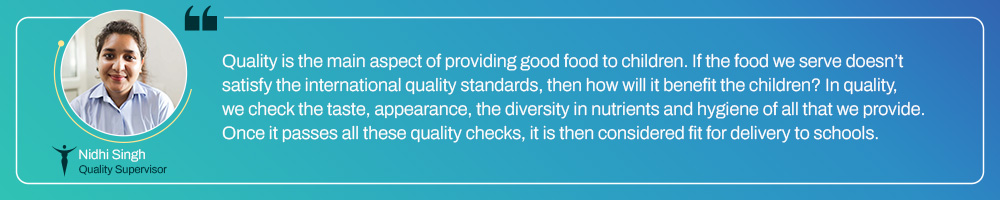
Nidhi Singh – Quality Supervisor
Barsana Kitchen is the story of a group of resilient women in the village who have become the backbone of its daily operations, helping build a hunger-free, self-sufficient future. Each meal prepared here under the Mid-Day Meal Scheme enables change not just in children but also in these women’s lives.

If you wish to support this cause, donate online and help us reach more children while advancing women empowerment.


read more
Akshaya Patra Initiative

Green Initiatives at Akshaya Patra: EV, Solar & Sustainable Kitchens

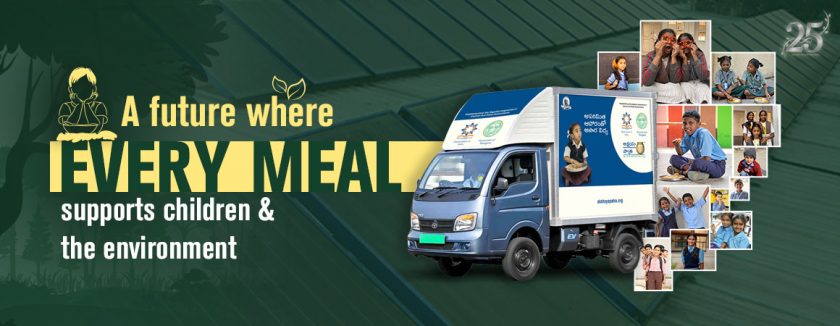
A future where every meal supports children & the environment

A nutritious school meal does far more than address hunger. Behind every meal served lies a large ecosystem of sourcing, cooking, transportation and resource management. As conversations around climate change and environmental responsibility continue to grow, the need for sustainable food systems has become increasingly important.

For large-scale feeding programmes, sustainability is no longer an additional effort. It is an operational responsibility.

The Akshaya Patra Foundation demonstrates how nutrition initiatives can support both children and the environment through efficient and responsible feeding models. By integrating operational efficiency with environmentally conscious practices, the foundation continues to show how school meal programmes can create long-term social impact.

What Does Sustainable Feeding Mean?

Sustainable feeding refers to food systems that nourish communities while minimising environmental impact and supporting long-term scalability.

This approach focuses on creating systems that are:

  • Resource efficient
  • Environmentally conscious
  • Operationally responsible
  • Socially impactful
  • Built for long-term sustainability

In school feeding programmes, this means preparing and distributing meals in ways that reduce waste, optimise resources and strengthen communities over time.

Sustainable Kitchens That Improve Efficiency

One of the defining features of The Akshaya Patra Foundation is its centralised kitchen model. These large-scale sustainable kitchens are designed to prepare high volumes of meals with consistency, hygiene and operational precision while supporting responsible resource management.

The centralised approach helps support:

  • Standardised meal preparation
  • Better inventory management
  • Reduced operational duplication
  • Improved food safety systems
  • Efficient utilisation of resources

These sustainable kitchens also make it easier to monitor and improve environmental practices across operations.

Smart Technology for Responsible Feeding

Technology plays an important role in making large-scale meal programmes more sustainable. The foundation uses automated and semi-automated cooking systems that improve consistency while reducing operational inefficiencies.

Some sustainability-focused measures include:

  • Steam-based cooking systems that optimise fuel usage
  • Solar energy integration in select kitchen facilities
  • Automated cooking processes that improve portion control
  • Efficient water usage and cleaning systems
  • Structured inventory and meal planning to minimise wastage

Even small operational improvements can create meaningful impact when multiplied across millions of meals served every day.

Many organisations are recognised as green NGOs and The Akshaya Patra Foundation continues to demonstrate how environmentally conscious systems can support large-scale social initiatives. NGOs today are increasingly adopting sustainable operational models to balance development goals with environmental responsibility.

Reducing Food Waste Through Better Planning

Food waste remains a major global challenge. Wasted food also means wasted water, energy and resources used during production and transportation.

To address this, The Akshaya Patra Foundation follows structured demand-based meal preparation systems. Meals are prepared according to actual school requirements, helping reduce unnecessary excess.

This includes:

  • Forecast-based preparation
  • Planned inventory systems
  • Standardised meal portions
  • Coordinated distribution processes

Efficient planning helps improve both operational effectiveness and responsible resource usage.

Sustainability Beyond the Kitchen

Sustainability is not only about environmental responsibility. It is also about long-term community development.

School feeding programmes contribute toward improved classroom concentration, school attendance and educational participation. Access to regular nutritious meals encourages children to stay in school and continue learning, especially in underserved communities.

The impact extends beyond individual students and contributes toward stronger families and communities over time.

Feeding the Future Responsibly

As sustainability becomes an increasingly important global priority, every large-scale NGO is being encouraged to rethink how impact is created. The Akshaya Patra Foundation continues to demonstrate that large-scale feeding programmes can support both child nutrition and responsible operational practices simultaneously.

Every meal served represents more than nourishment. It reflects a commitment toward:

  • Responsible resource management
  • Sustainable community support
  • Efficient operations
  • Long-term developmental impact

Supporting Sustainable Feeding

Individuals today are increasingly choosing to support environmentally responsible initiatives through digital giving platforms. People can now donate online to support school feeding programmes that combine child nutrition with sustainability-focused operations.

read more
1 2 3 66
Page 1 of 66