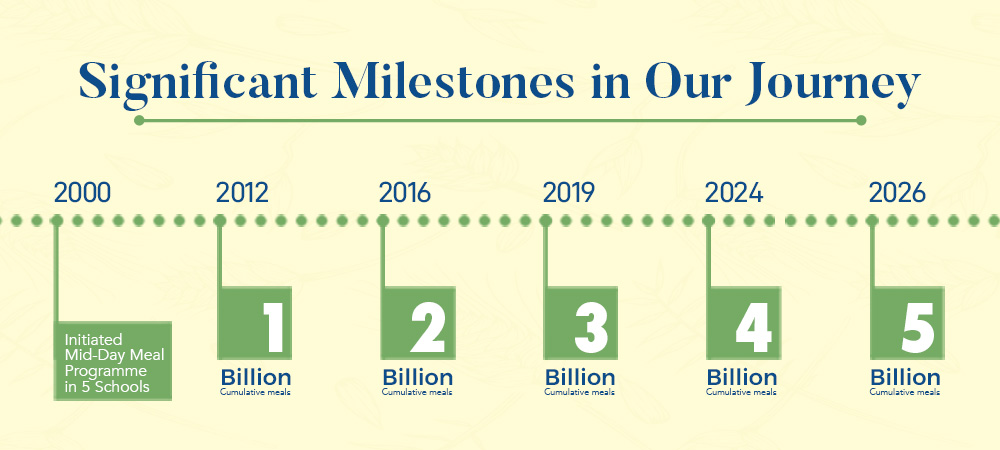

For decades, India’s Mid-Day Meal Programme has been recognised as one of the country’s most impactful social initiatives. What started as an incentive to encourage school enrolment has now become a vital support system that helps children continue their education with dignity, health and hope.
At a time when access to quality education is key to building stronger communities, school meals continue to be an important factor in ensuring that children not only enrol in school, but attend consistently. For millions of children studying in government and government-aided schools, a nutritious meal in school is often the assurance that lets them to focus on learning instead of hunger.
This mission at Akshaya Patra has turned out to be much more than just serving food. Every meal represents continuity in education, improved classroom participation and the assurance that comes from knowing a child’s nutritional needs are being cared for every school day.
From School Enrolment to Sustained Education
In the early years of the programme, mid-day meals were primarily perceived as an incentive for parents to send their children to school. In rural and economically vulnerable communities, the prospect of a cooked meal was a powerful draw for enrolment.
But, over the years, the role of school meals has changed significantly.
Today, mid-day meals act as a stabilising support system for children and families. They help reduce absenteeism, improve concentration in classrooms and encourage children to return to school regularly. For many parents facing financial uncertainty, the assurance of a nutritious school meal reduces one major daily concern.
The impact goes beyond academics. A wholesome meal during the school day contributes to better nutrition, supports physical growth and creates a positive learning environment where children can participate actively.
This shift from “incentive” to “impact” reflects the growing understanding that education and nutrition are deeply interconnected.
Delivering More Than Meals
Serving freshly cooked meals to children at scale requires operational excellence. Akshaya Patra’s centralised kitchens are designed to ensure that every meal served maintains high standards of safety and quality so children can depend on a consistent meal every school day.
Today, 47 kitchens across the country are certified under ISO 22000:2018 Food Safety Management Systems (FSMS), underlining the organisation’s commitment to safe food handling and quality management. Some of the kitchens are also certified under ISO 14001:2015 and ISO 45001:2018 for Environment, Health and Safety Management Systems, while the central office in Bengaluru is certified under ISO 9001:2015 for Quality Management Systems. In addition, 21 Food Safety and Quality Control labs, including NABL-accredited facilities, help monitor food safety standards consistently.
These systems are not only about operational efficiency. This helps ensure that children receive safe, nutritious and timely meals that support uninterrupted learning.
The day starts in the early hours of the morning.
Fresh vegetables are procured daily and undergo sorting and washing before use. To maintain freshness and minimise wastage, the kitchens follow FIFO (First In, First Out) and FEFO (First Expiry, First Out) methods for storage and usage of raw materials. The organisation also follows Good Manufacturing Practices (GMP) across both centralised and decentralised kitchens, with regular audits conducted to assess hygiene protocols, food safety standards and operational consistency.
From procurement to preparation and delivery, every stage is monitored through scientific quality assurance measures and HACCP-based processes to reduce food safety risks. Temperature checks are carried out at regular intervals to ensure food safety and consistency throughout the cooking and delivery process.
These processes help schools and families rely on the programme with confidence, knowing that children receive freshly cooked meals prepared with care and consistency.
The delivery process itself is equally important.
Specially designed delivery vehicles follow carefully planned routes to ensure meals reach schools on time before lunch hours begin. Insulated stainless steel vessels help retain freshness and temperature during transportation so that children receive hot meals during the school day.
Behind every meal served is a carefully coordinated ecosystem that supports classroom attendance, concentration and continuity in education for millions of children every school day.
Supporting Children Beyond the Classroom
For children, school is not just a place of learning. It is also a place of safety and opportunity.
A nourishing meal often becomes a source of motivation for children to attend school regularly. Teachers across communities have observed that students are more attentive and engaged when they are not distracted by hunger.
Parents, too, view school meals served by NGOs in India as reliable support during times of economic pressure. For families managing limited household resources, the assurance that their child will receive a wholesome meal in school provides both nutritional and emotional relief.
As India continues to strengthen its focus on education and child development, the importance of school meal programmes remains undeniable. The journey from improving enrolment numbers to enabling long-term educational continuity highlights how deeply nourishment influences a child’s future.
A Shared Commitment to Education and Nutrition
Akshaya Patra currently serves nutritious meals to 2.35 million of children across 25,000+ government schools in India every school day under the PM POSHAN initiative. To further help children benefit, morning nutrition snacks are provided to give them a healthy start to their school day. This impact is made possible through the collective support of donors, partners and well-wishers who believe that no child should have to choose between hunger and education.
Donate online to contribute to something far greater than a meal. Help create consistency in classrooms, encourage children to return to school every day and support families who rely on these meals as part of their children’s educational journey.
What was a simple incentive yesterday, has today become a foundation for learning, growth and opportunity.
And with continued support, millions more children can walk into classrooms each morning ready to learn, participate and dream of a brighter future.